If you ask most people to guess the second word after “Quality,” they would probably say “Control.”
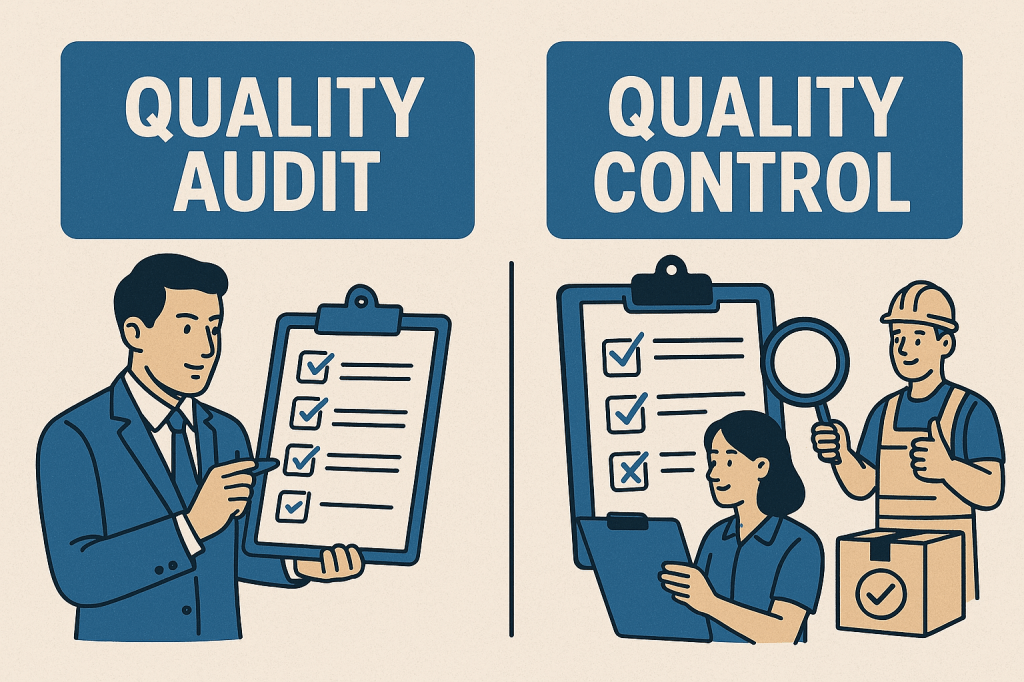
It’s a term closely linked to quality and widely used. But what exactly is Quality Control? Is it simply a process to check whether a product meets quality standards?
Quality Control
In simple terms, when we produce a product, we need a control mechanism to ensure all its requirements are met. A control system is essential to maintain consistent quality because we know that processes can fail—not just those performed by people but also those carried out by machines, automation systems, and robots. Regardless of the production method, a control mechanism is always necessary.
Taking it one step further, we even implement a second layer of control to check the controller itself. For example, in some processes, we introduce trap parts to test whether the control mechanism (such as a camera, sensor, or visual inspection) still detects failures. If it fails to detect them, we know something is wrong with the control mechanism, and corrective action is needed.
So, in essence, quality control ensures that a part meets quality standards. But then, what is a quality audit? If we already have control mechanisms in place, why do we need audits? Are they just another layer of control?
Well… the simple answer is no.
Quality Audits
Quality audits are not about measuring the quality of individual parts, nor are they conducted just because companies or governments require them. Audits are performed to ensure that the entire system functions properly. They are essentially an end-to-end sample check of all processes.
Take, for example, Quality Management System (QMS) audits like IATF 16949. These audits assess various aspects of an organization, including documentation, production processes, engineering files, and training records—basically, almost everything related to the company. However, an audit does not guarantee continuous production quality; it’s more like a snapshot of the organization at a specific point in time.
Another example is the VDA 6.3 Process Audit, which evaluates the entire production process through sample checks. But again, it does not guarantee that all products will meet quality standards. It simply captures a moment in time, providing insight into how well the process functions.
What’s the Key Difference ?
- Quality control checks specific parameters of a product or process to ensure continuous quality.
- Quality audits assess the health of the entire system, including production and control mechanisms, to verify whether everything is working as intended.
While quality control focuses on production, quality audits evaluate both production and control systems together. In short, audits check whether the entire quality system is functioning properly.
What do you think about these two concepts—Quality Control and Quality Audits? I’d love to hear your thoughts!

 Mete Kilic
Leave a Reply