IATF 16949:2016, the Automotive Quality Management System (QMS) standard, consists of 10 main clauses, each with multiple sub-clauses. While the standard provides detailed requirements on what needs to be done, it does not prescribe how to do it, leaving the implementation up to organizations.
So, how should we structure this system within the organizations? What are the key elements that cover the clauses of IATF 16949? Do we have a simple answer?
QMS Processes – The Core of the System
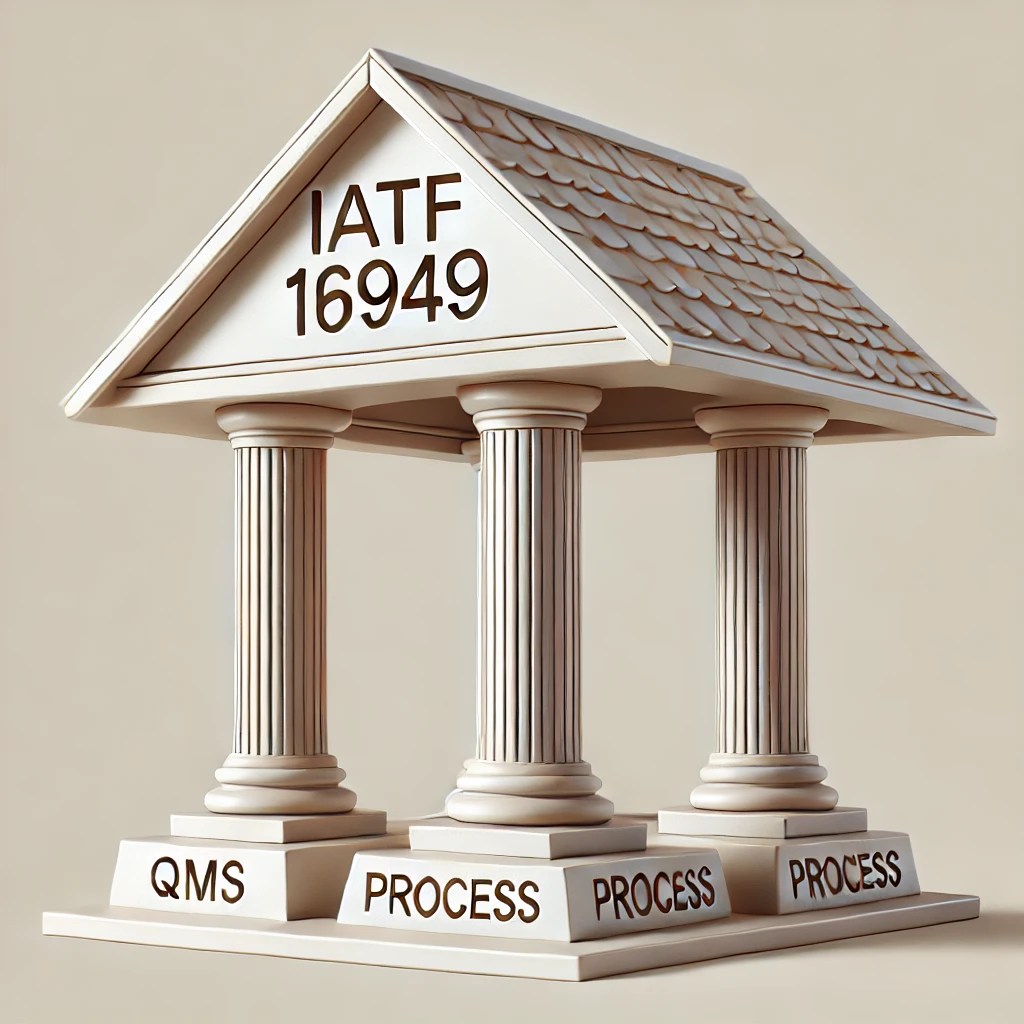
The simple answer is QMS Processes. QMS Processes are the main pillars of the entire quality management system. Let’s use an analogy: if IATF 16949 is a roof, then QMS Processes are the pillars holding it up.
These processes form the foundation that supports all the requirements of the standard. That’s why auditors typically ask for process documentation first, because processes define the structure, execution, and performance of the system at a fundamental level, rather than just listing procedural steps.
These processes can be documented in different formats, such as SIPOC diagrams, Turtle Diagrams, or process flowcharts. The key point is that they must align with QMS requirements and include measurable KPIs. After all, how else can we determine whether a process is performing effectively, right?
Processes vs Departments – A Common Misconception
One important thing to clarify: Processes are not the same as departments. A QMS Process can involve multiple departments, and cross-functional teams can be responsible for the same process.
For example, if you have a New Product Launch Process, it will likely involve both the Engineering and Project Management teams. However, there should always be one primary process owner to ensure accountability.
That being said, I have to admit, I also prefer aligning QMS processes with departments whenever possible. It simply makes governance easier. But does that mean it’s always the best approach? Not necessarily. The key is to strike a balance between functional ownership and cross-functional collaboration.
Key Takeaways – A Structured Framework
So, can we visualize the system like this?
- If IATF 16949 is the roof, then QMS processes are the pillars holding it up.
- Procedures? They are the branches, describing how each process should be executed in a structured way.
- Instructions? These would be the leaves, providing step-by-step guidance for specific works and tasks.
Does this framework make sense to you? Would you agree, or do you have a different approach?

 Mete Kilic
Leave a Reply